
Biotech Software Engineering Blog

Zero-Knowledge Architecture for Your Lab

You've decided your biotech data needs processing-time encryption. Now comes the hard part: choosing a key ownership model, defining trust boundaries, and building an architecture your compliance team and your bioinformaticians can both live with.

AWS Nitro Enclaves for Biotech Data
Your genomics pipeline decrypts data into plaintext memory every time it runs. AWS Nitro Enclaves fix that. Here's how the architecture works and what it means for proteomics, genomics, and clinical workloads.

Why Biotech Can't Trust the Cloud
A pharmaceutical company has 50TB of genome data and AWS could process it in days. But their legal team says no. Here's why biotech can't trust the cloud and how confidential computing and hardware-enforced security fixes it.
Setting up NF Core with MicroK8s
A step-by-step guide on setting up and running Nextflow workflows on a MicroK8s Kubernetes cluster, demonstrating how to leverage Terraform provisioning, persistent storage, and containerized execution to enable scalable, reproducible scientific data analysis, including executing NF Core pipelines for streamlined bioinformatics and genomics research.

Use Case: The Galaxy Project
A step-by-step guide to deploying the Galaxy Project, a scalable, web-based computational workbench for scientific workflows, on an AWS EC2 instance using Terraform, Kubernetes, Helm, and CVMFS, enabling researchers to efficiently analyze complex datasets in a cloud-based environment.
Putting it All Together: CVMFS In Action
A step-by-step guide to setting up Nextflow on a MicroK8s Kubernetes cluster for scientific data processing, enabling scalable, reproducible, and modular computational workflows.
Kubernetes and Helm: Orchestration
A step-by-step guide to setting up a Kubernetes cluster with integrated CVMFS (CERN Virtual Machine File System) support on MicroK8s, leveraging Helm for streamlined deployment, configuring persistent storage with NFS, and ensuring efficient data access for high-performance workloads.
Terraform: Provisioning AWS with Code
A step-by-step guide on using Terraform to deploy an AWS EC2 instance for a MicroK8s Kubernetes cluster, covering prerequisites, security setup, configuration files, and automation best practices.
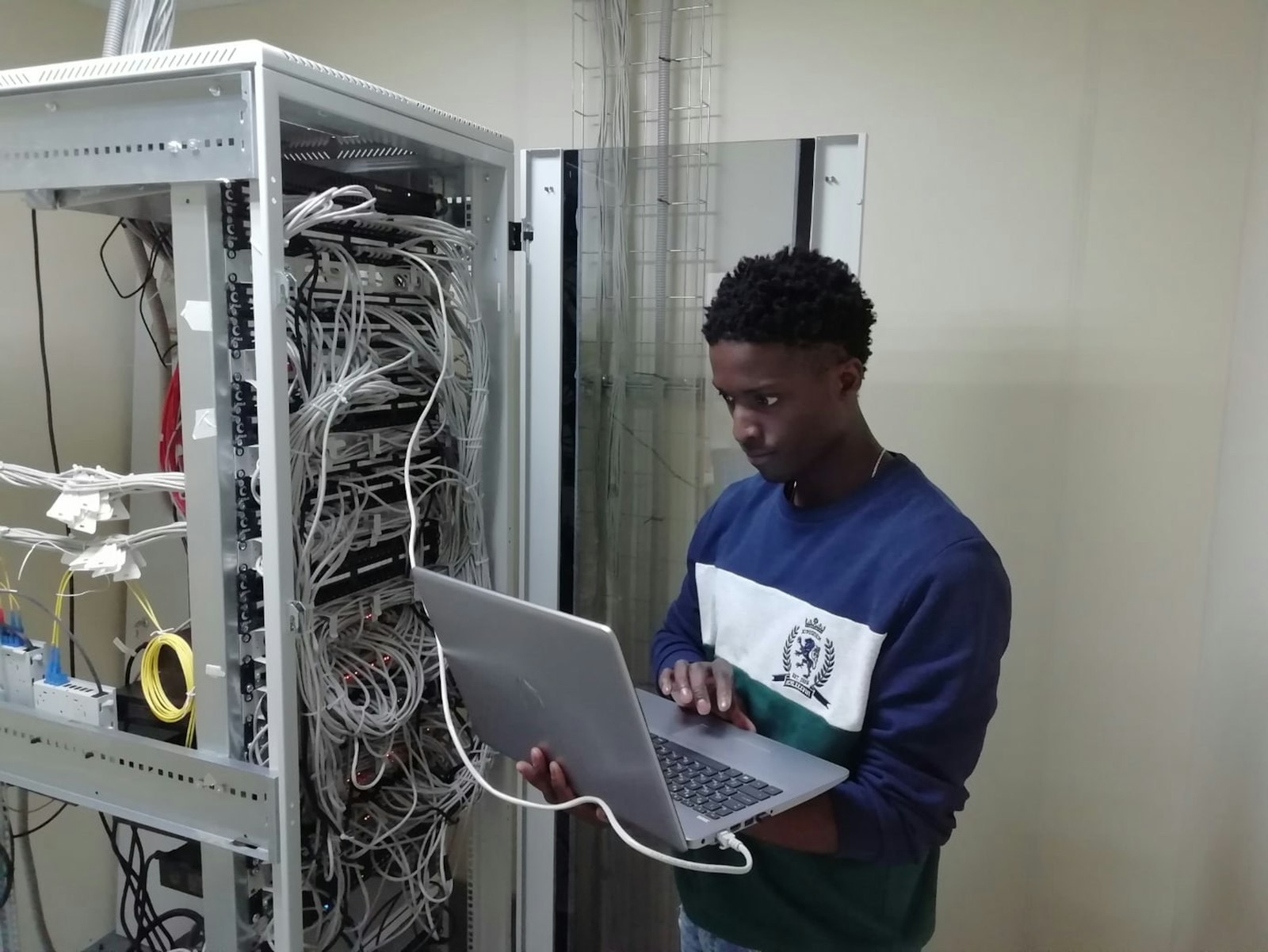
DevOps: What? Why? How?
Explore how DevOps practices enhance the deployment and management of CVMFS by automating complex processes, improving collaboration, and leveraging tools like Docker, Terraform, AWS, and Kubernetes to create a scalable, efficient, and reproducible development environment.